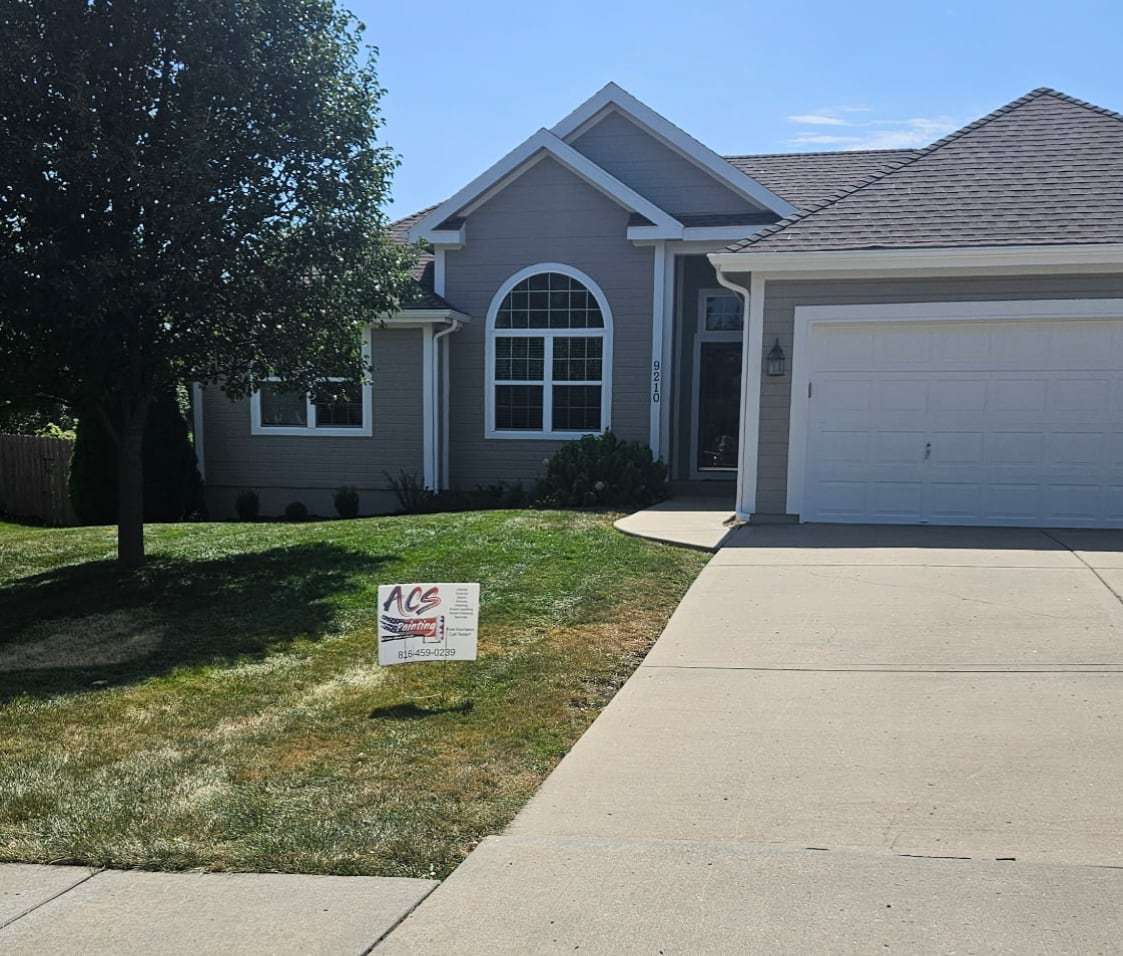
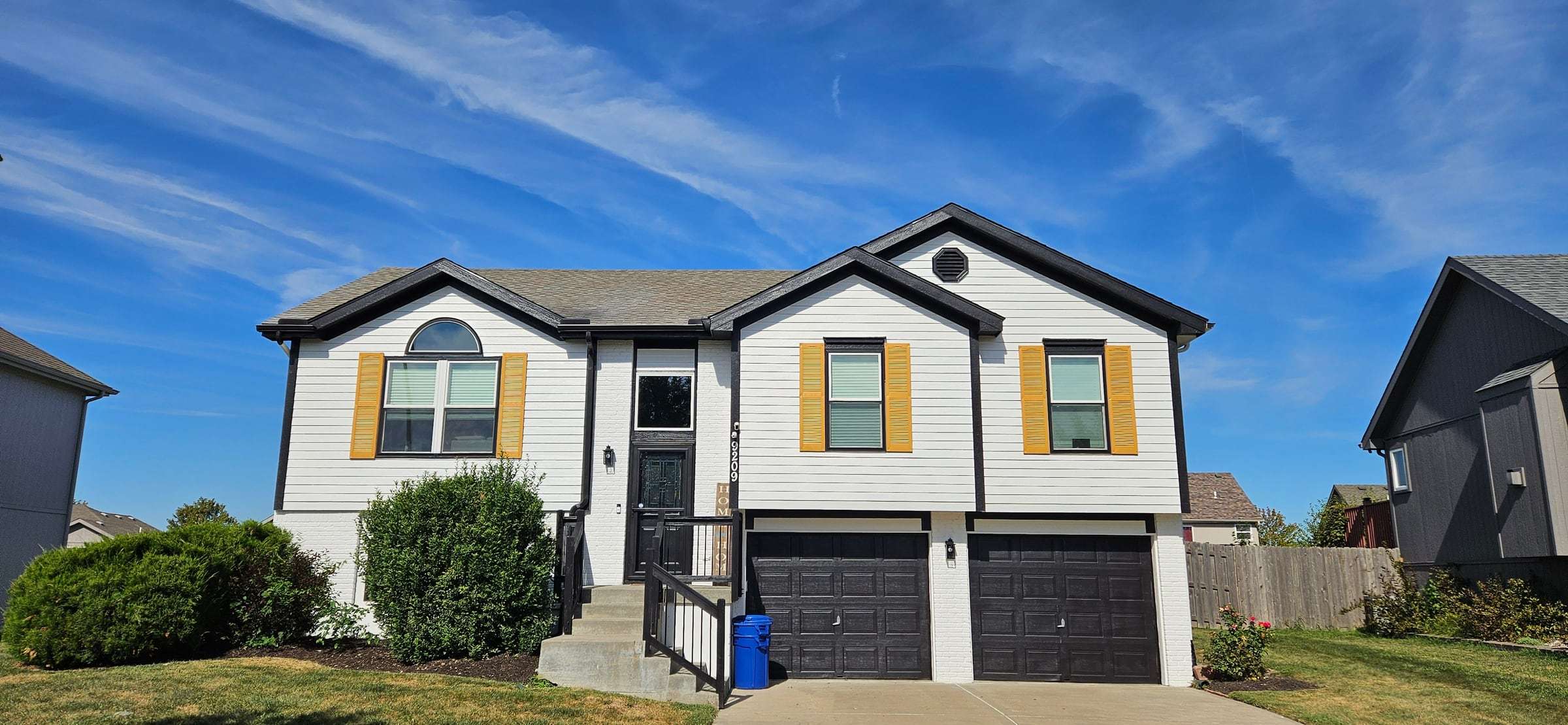
A Tudor-style exterior, repainted and its brick restained
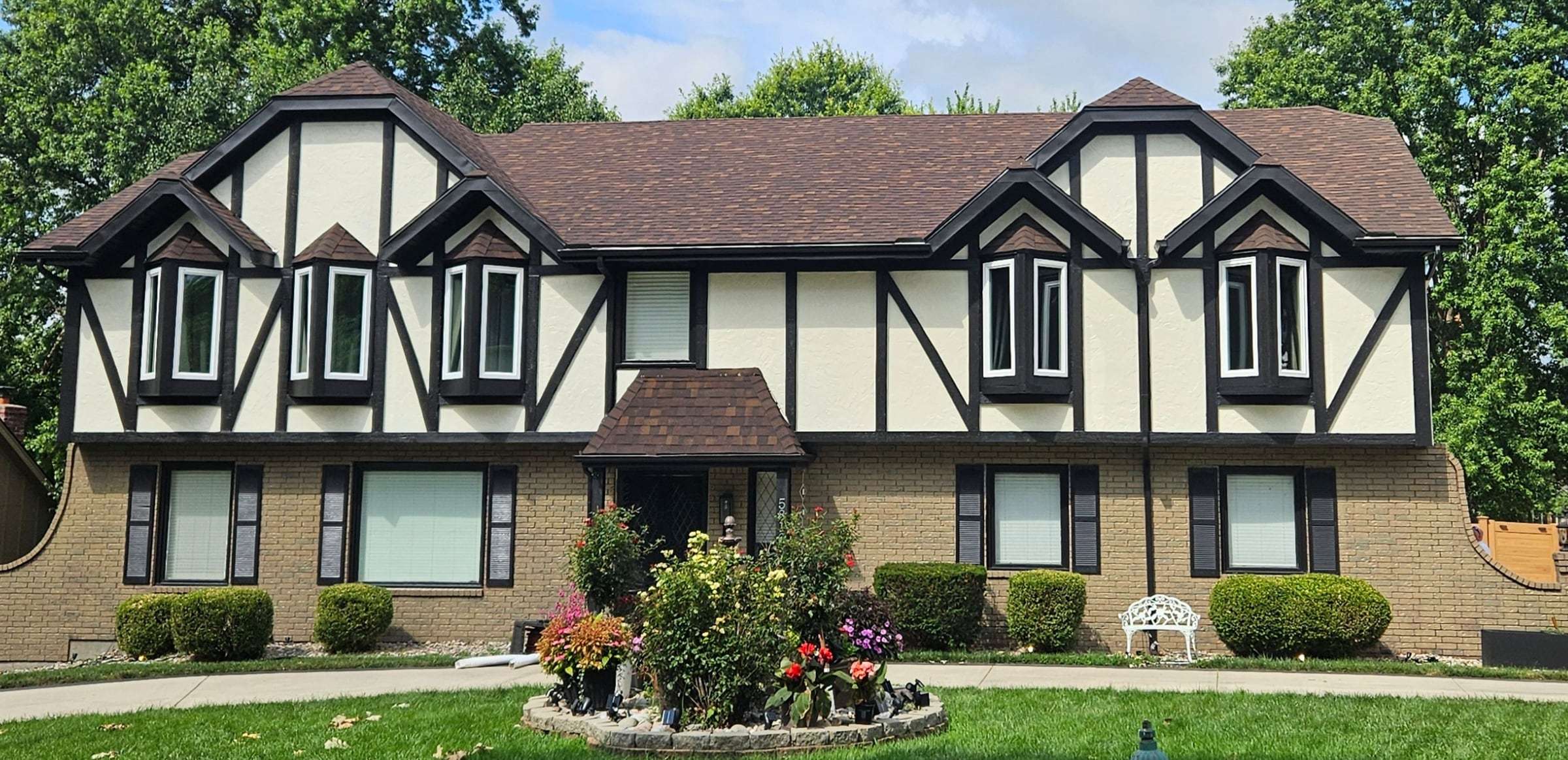
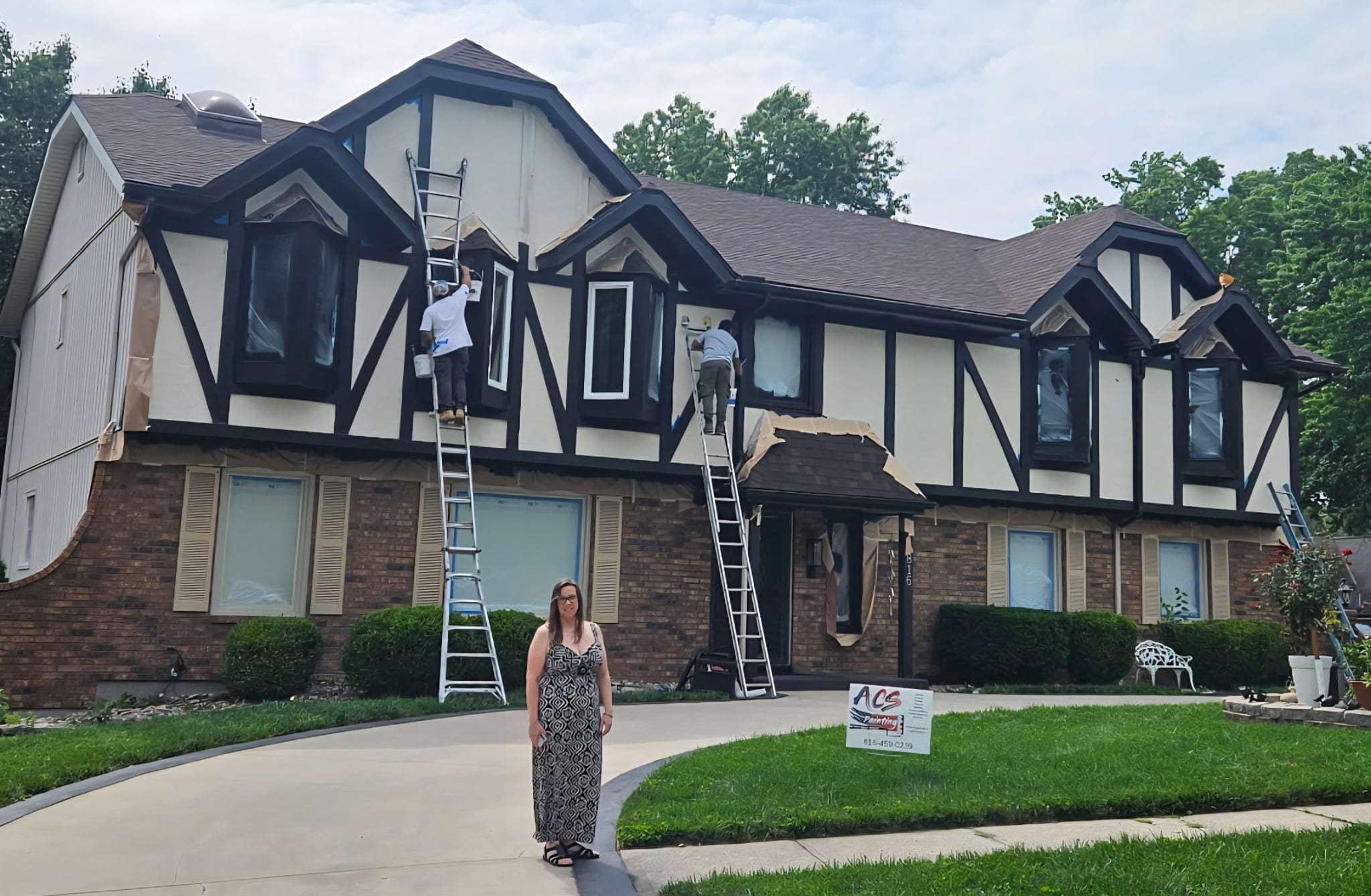
Beige panels and brown half-timbering became cream and black, and the red brick base was stained a lighter, warmer tone. The house looks completely different, and not one surface material was replaced.
- Service
- Exterior painting
- Area
- Kansas City's Northland
- Photographed
- June–July 2025
Starting point
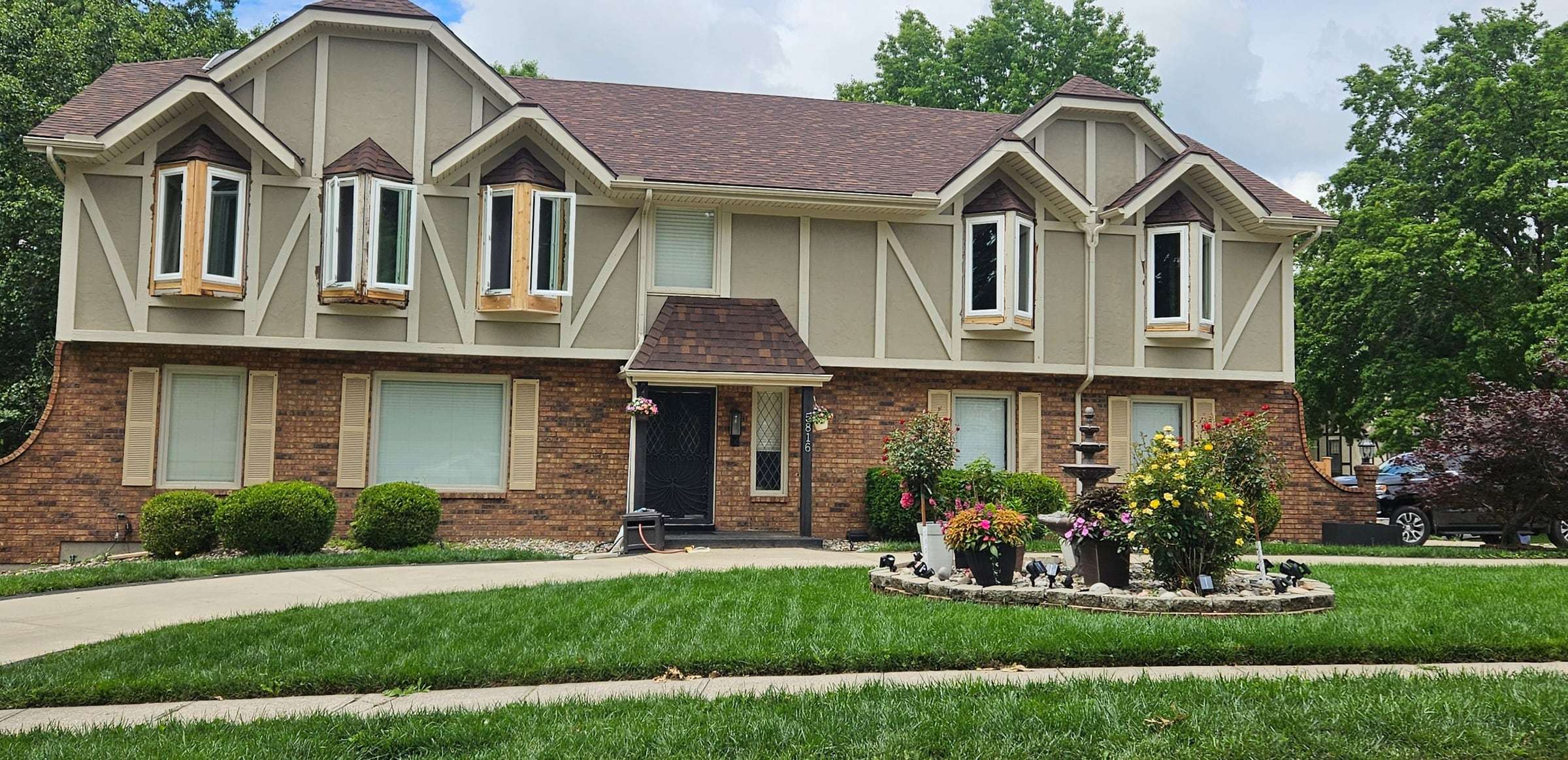
- Beige stucco-style panels framed by brown half-timber boards and window surrounds.
- Orange-red brick across the lower story.
- Multiple dormers and bay windows, each with its own trim profile to cut in by hand.
What we did
- Siding panels repainted cream.
- Half-timber boards, window trim, fascia and dormers painted black.
- Brick on the lower story stained (not painted) to a lighter buff tone.
- Shutters finished dark to match the new trim.
Preparation
- Windows were taped and covered with film before any coating went on.
- Trim was prepared and spot-primed before the finish coats. You can see the patches of primer on the dormers in the in-progress photo.
- Work proceeded from extension ladders across the second story, one elevation at a time.
Finish
- Panels
- Cream
- Trim & half-timbering
- Black
- Brick
- Stained, lighter buff tone
- Product names
- Not recorded
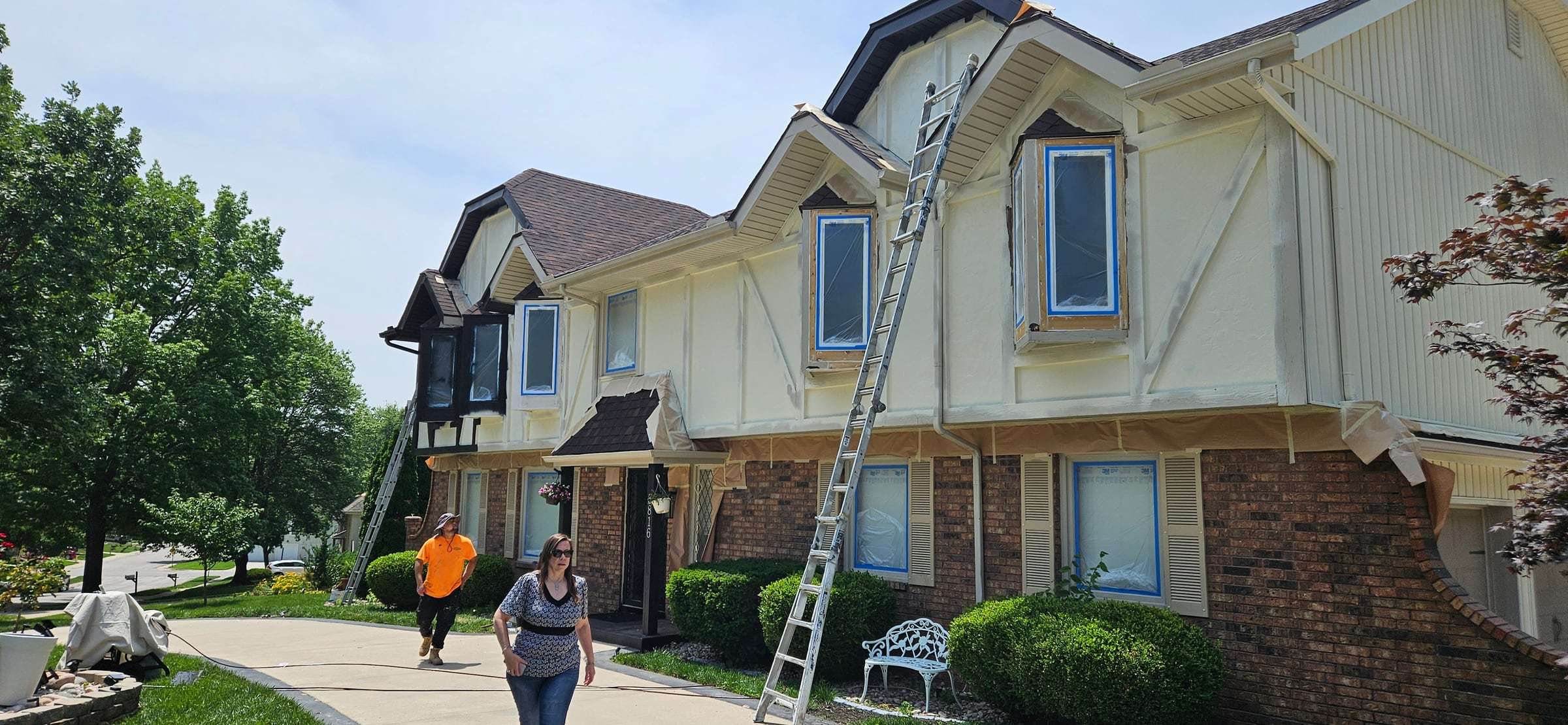
Why the trim was done separately
Half-timbering means hundreds of feet of trim meeting flat panels. The finished look depends on straight, consistent lines where black meets cream, so the panels and trim were painted as separate stages instead of in one pass.
During the job
Details come from ACS’s job photos and the project notes ACS published with them. Product names and exact durations are listed only when they were recorded. Location is shown generally to protect the homeowner’s privacy.