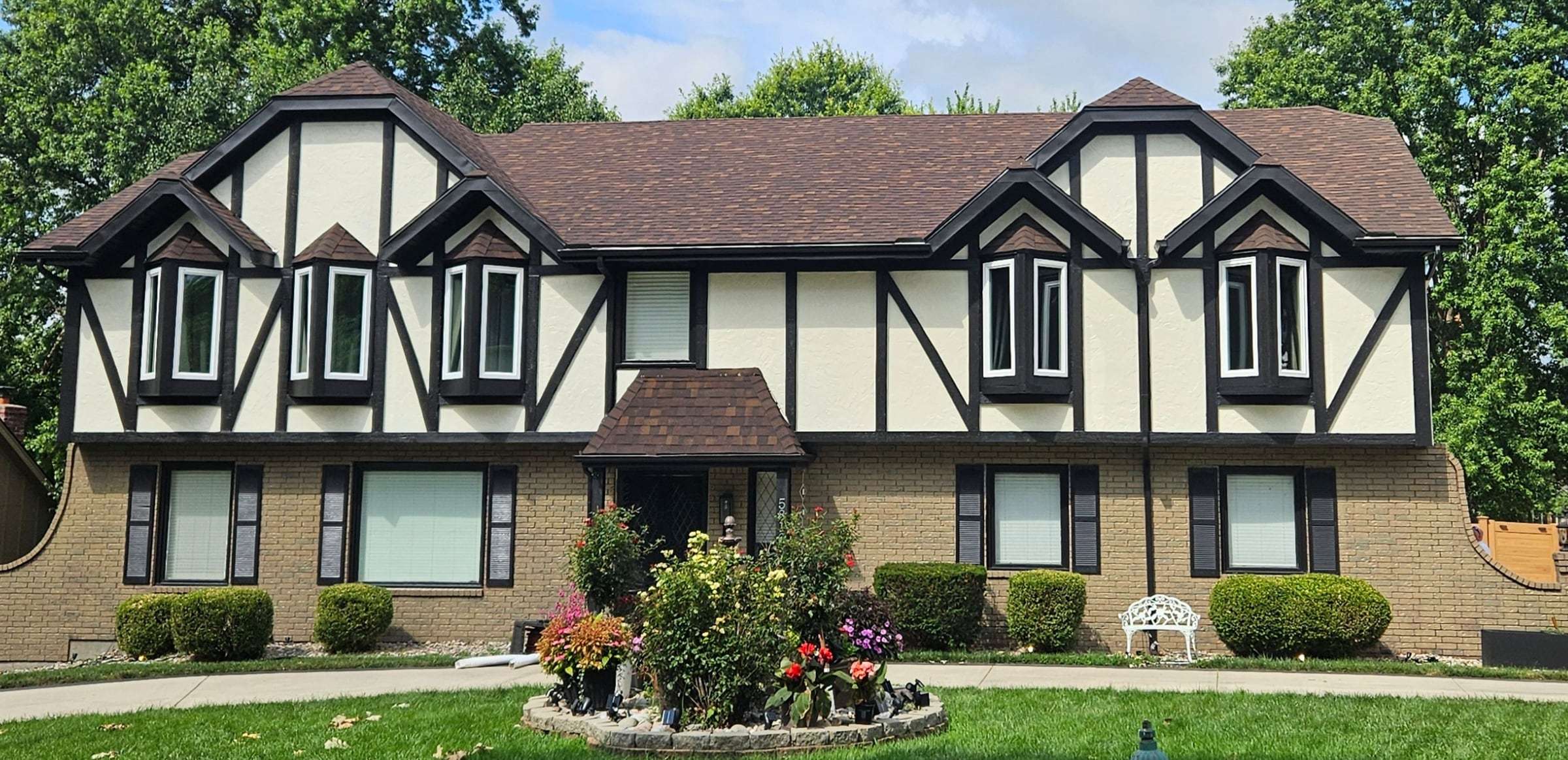
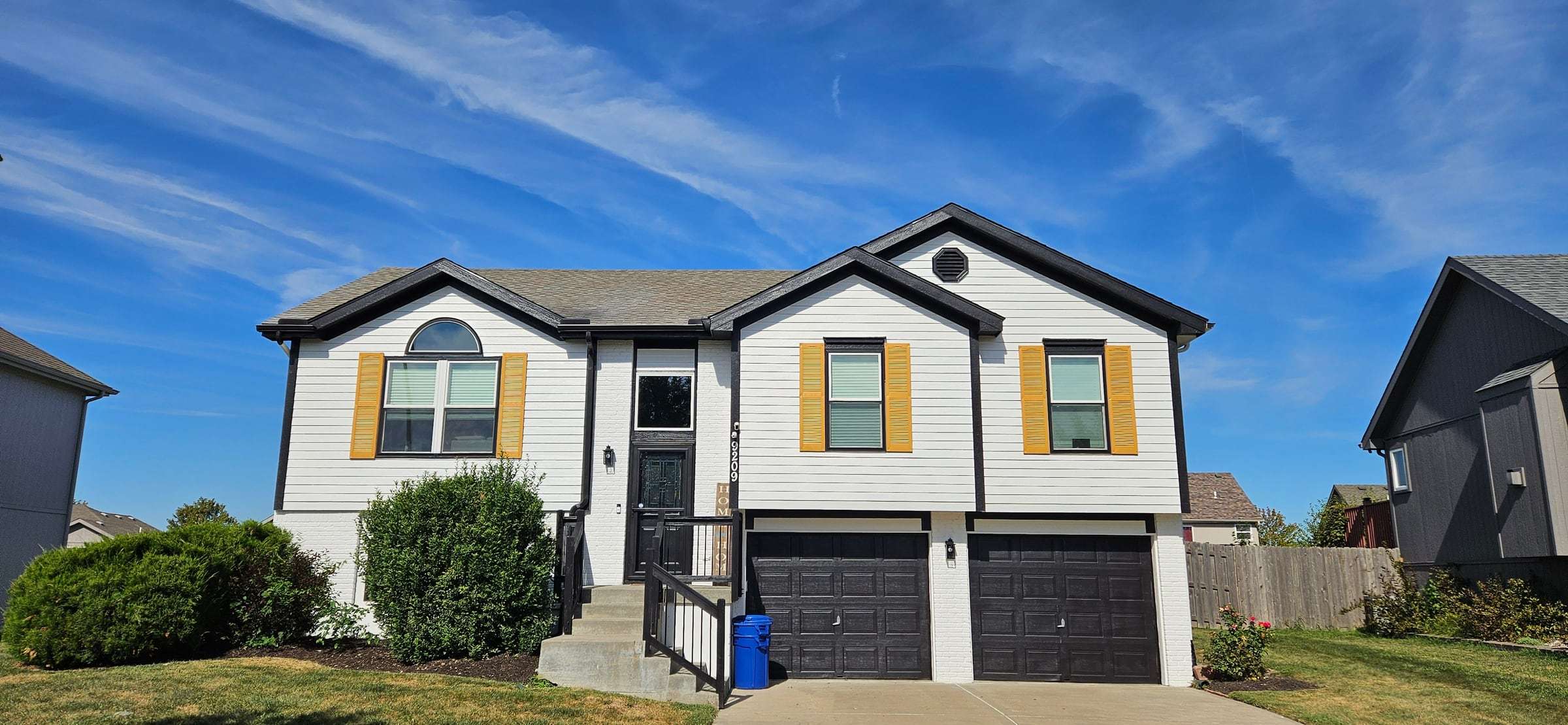
Siding repaired, then a brown ranch repainted gray and white
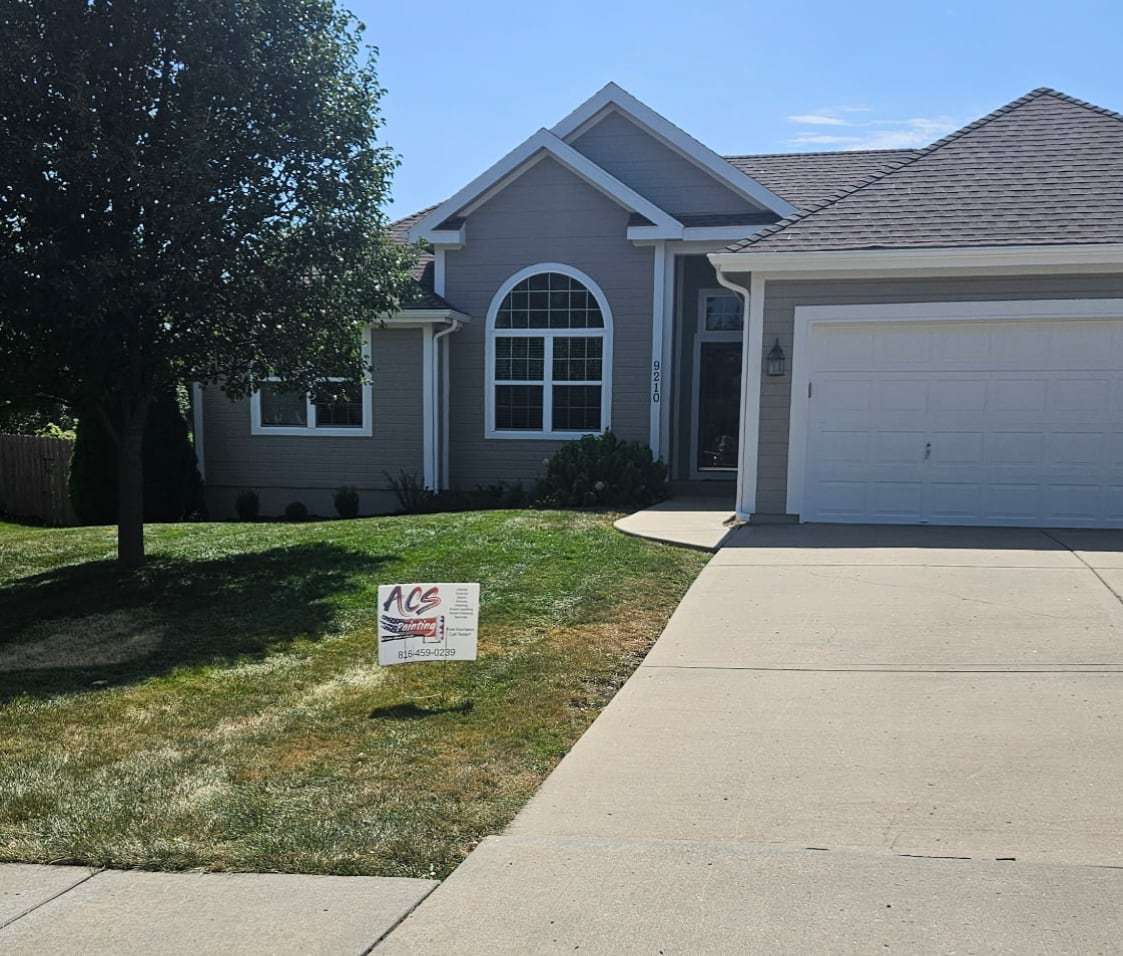
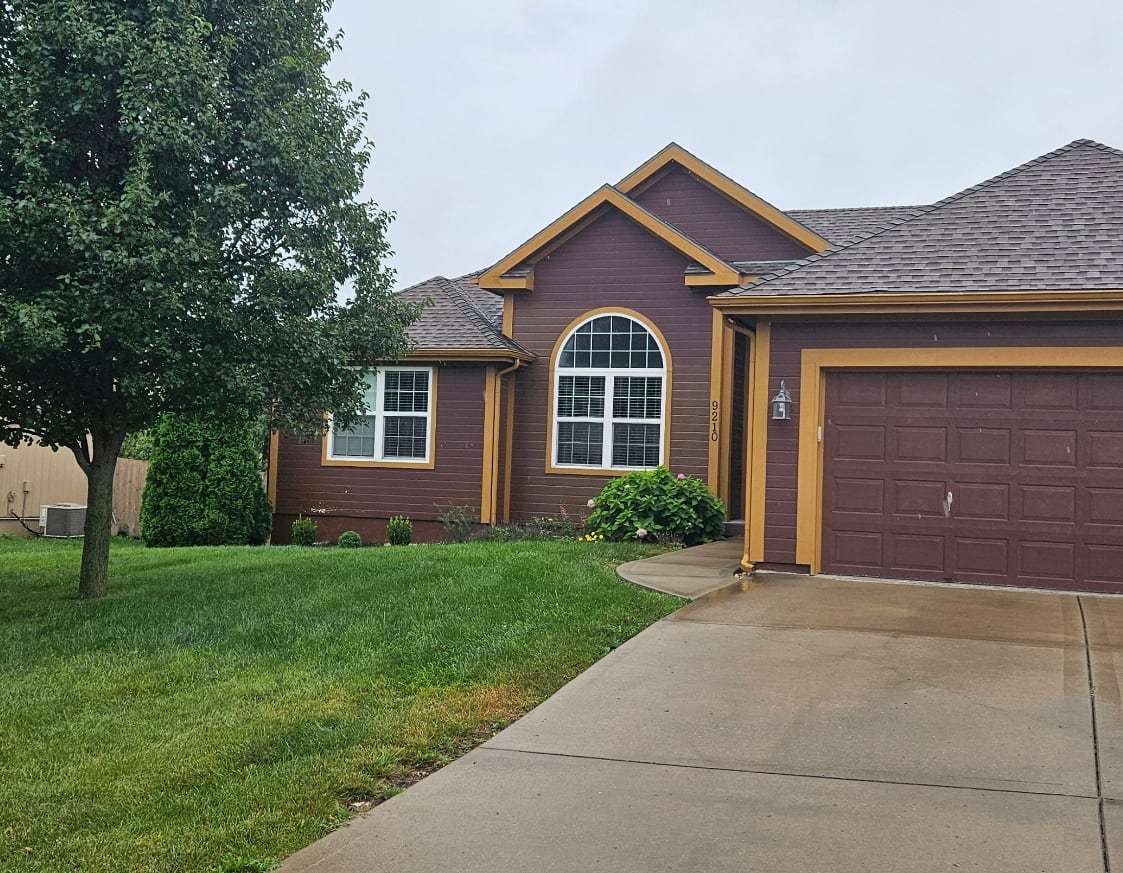
Before any paint, a damaged section of panel siding and part of the front horizontal siding were replaced so the new finish would sit on a sound surface. The home then went from maroon and gold to gray with white trim.
- Service
- Exterior painting
- Area
- Kansas City's Northland
- Photographed
- August 12–14, 2025
Starting point
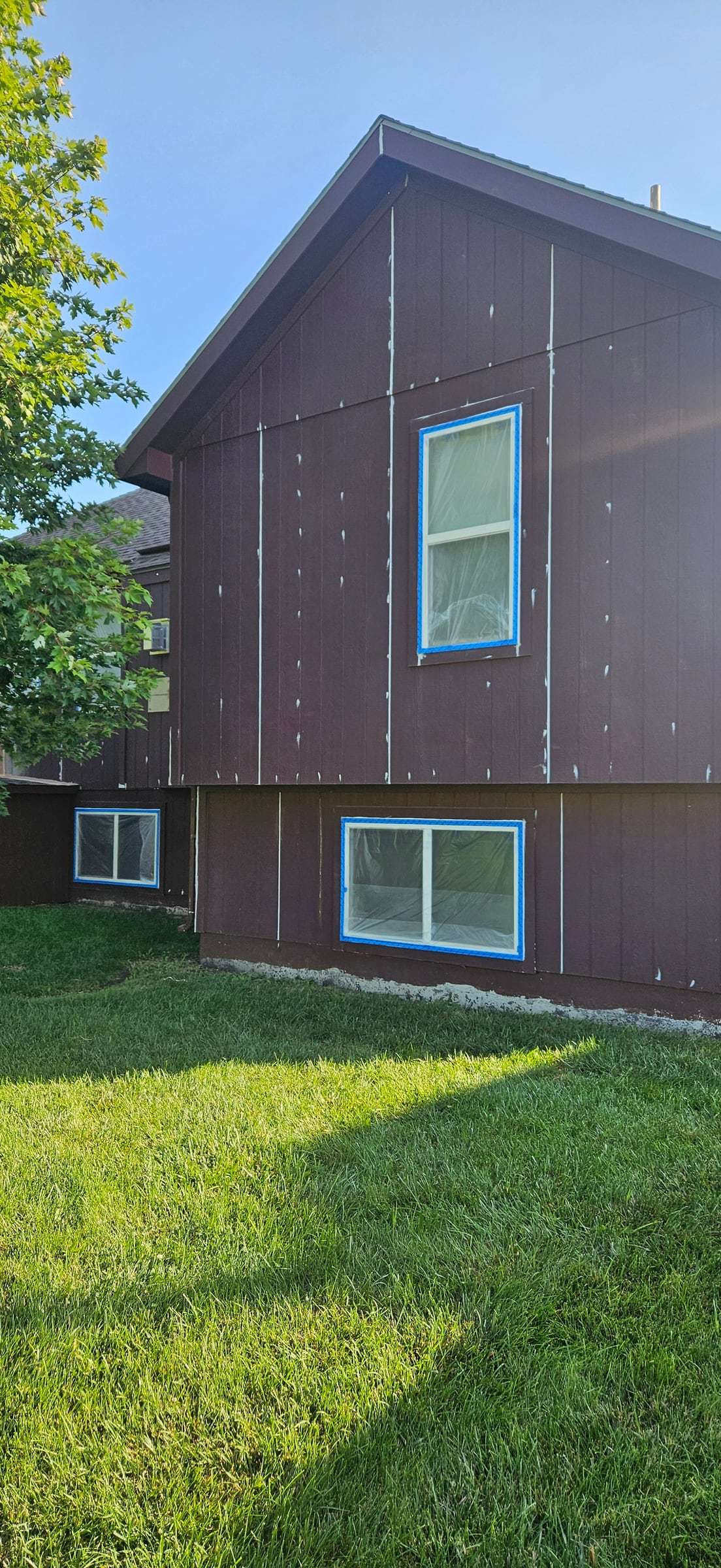
- Maroon panel siding with gold-painted trim.
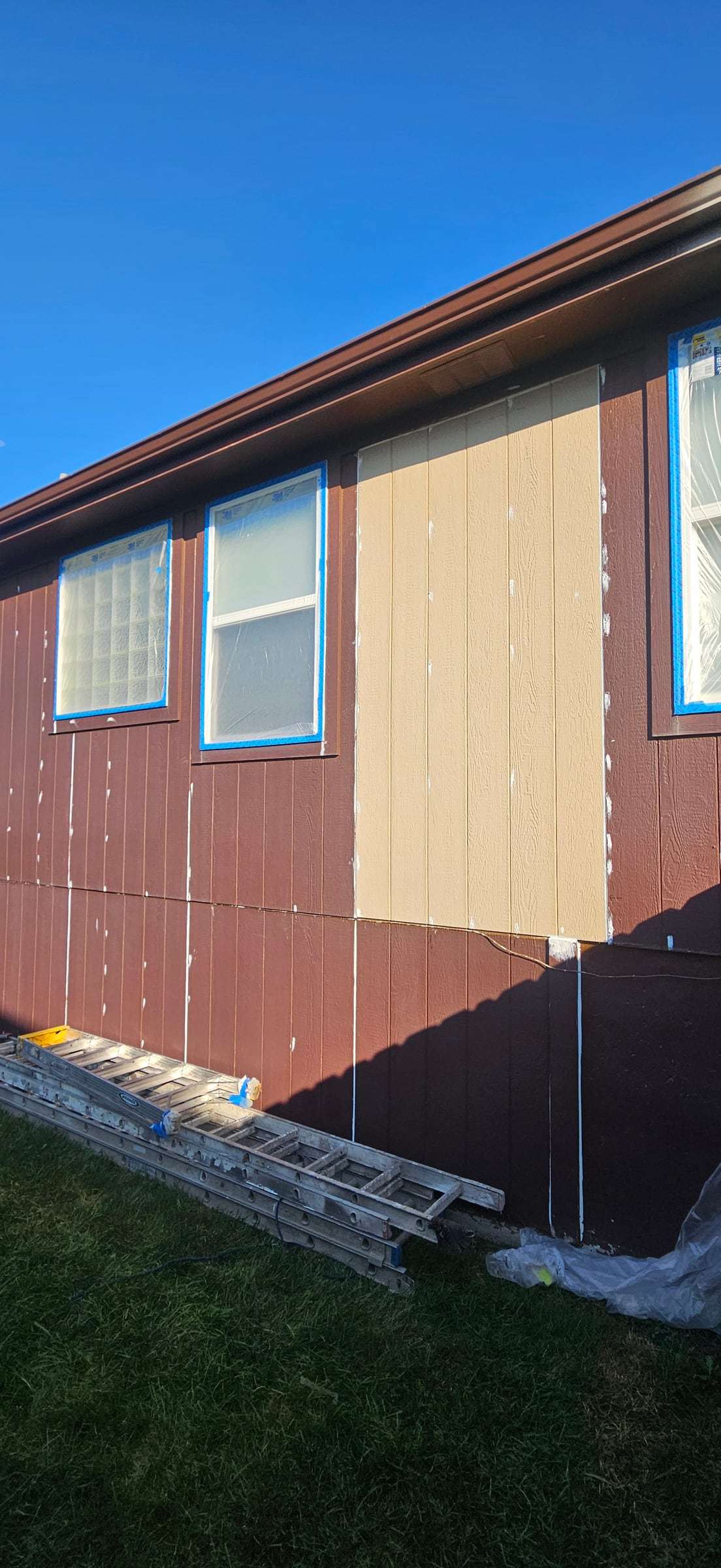
- A section of 4×8 panel siding and part of the front horizontal siding were damaged.
What we did
- Damaged 4×8 siding panel and horizontal front siding replaced.
- Seams, cracks and fastener holes caulked and filled.
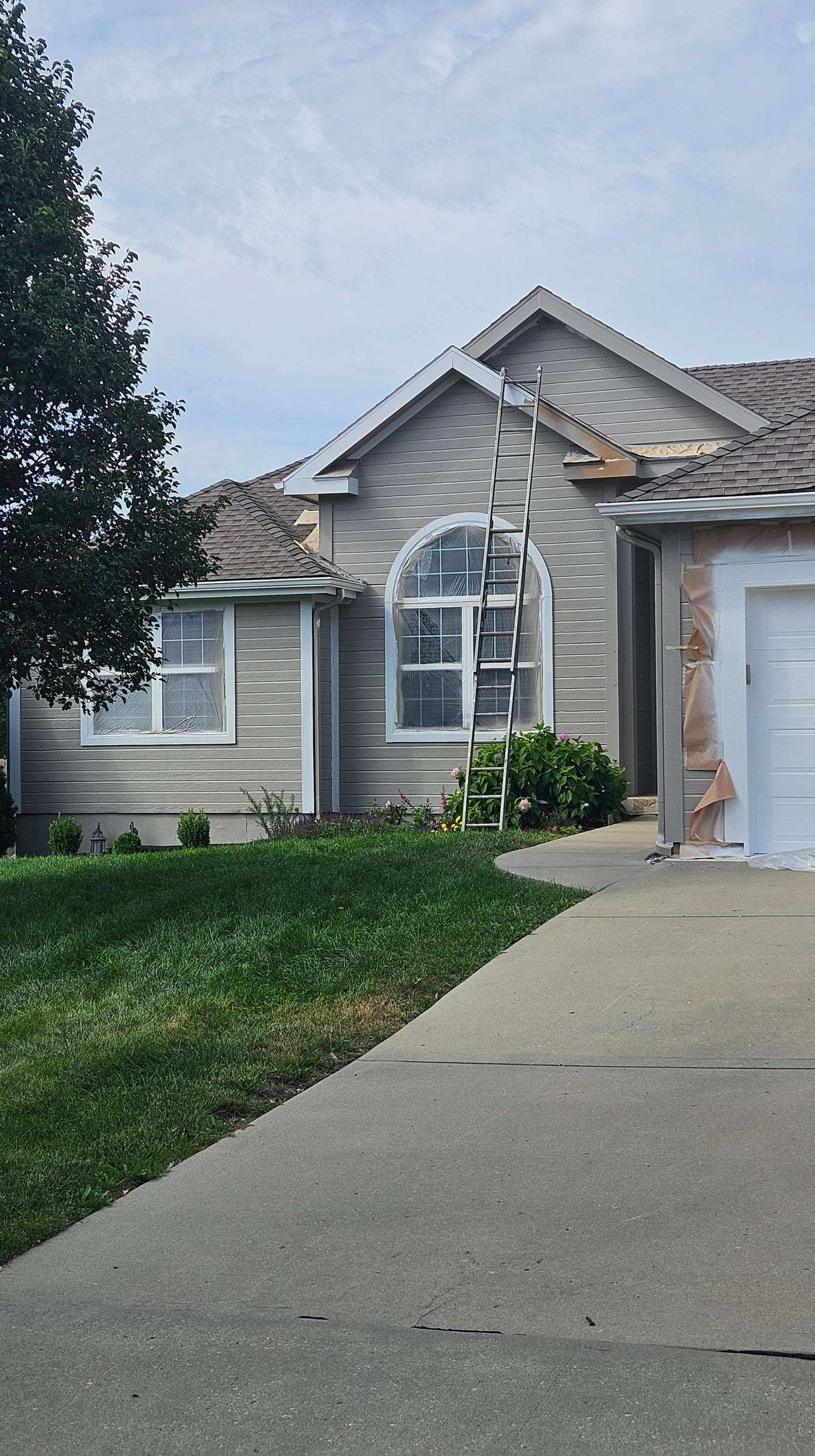
- Siding repainted gray; trim, doors and garage door painted white.
Preparation
- The damaged siding section was cut out and replaced with new panel before painting.
- Windows were taped and covered with film; seams and nail holes were caulked and filled (visible as white spots on the brown siding).
- ACS’s gallery notes also list power washing, scraping loose paint and priming.
Finish
- Siding
- Gray
- Trim, doors & garage
- White
- Repairs
- Panel and horizontal siding replaced
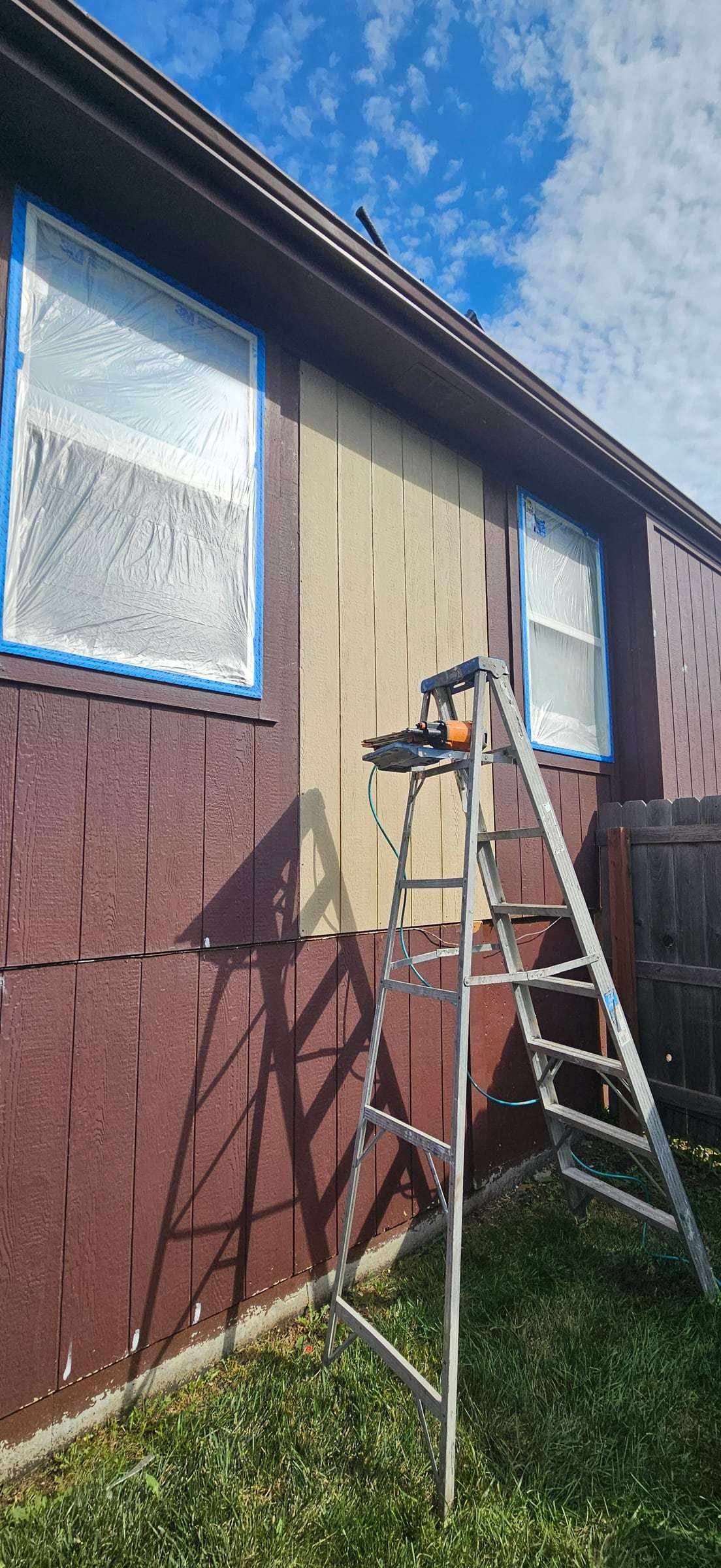
Replacing the siding first
Paint won’t fix damaged siding. It only hides it for a season. Replacing the failed section first meant the gray finish went onto a flat, sound surface that matches the rest of the wall.
During the job
Details come from ACS’s job photos and the project notes ACS published with them. Product names and exact durations are listed only when they were recorded. Location is shown generally to protect the homeowner’s privacy.